
2026 Poker Gambling Loss Deduction: The 90% Rule
See how the 2026 US federal gambling-loss limit works for poker, with clear examples, crypto record checks, and an IRS-sourced formula.

US poker players face a new federal calculation for the 2026 tax year. The maximum itemized deduction for gambling losses is now the lesser of 90% of documented gambling losses or gambling winnings.
That can leave part of a player's losses outside the deduction even when the player finished the year with no poker profit. The change makes accurate session and transaction records more important, especially when deposits and withdrawals use crypto.
This article gives general federal information for the 2026 tax year. It is not tax advice. State rules, professional gambling activity and individual facts can change the result. Ask a qualified US tax professional about your return.
The 2026 rule in one formula
The 2026 IRS Publication 505 states that the Schedule A deduction for gambling losses is limited to the lesser of:
- 90% of your losses from wagering transactions, or
- your winnings from wagering transactions.
In compact form:
Maximum loss deduction = min(90% × documented losses, gambling winnings)
This is a limit on an itemized deduction. It is not a tax rate, and it does not reduce the amount of winnings that must be reported.
Four worked poker examples
The table applies the IRS formula only. It does not calculate final federal or state tax.
| Gambling winnings | Documented losses | 90% of losses | Winnings cap | Illustrative maximum deduction | Documented losses not used |
|---|---|---|---|---|---|
| $10,000 | $15,000 | $13,500 | $10,000 | $10,000 | $5,000 |
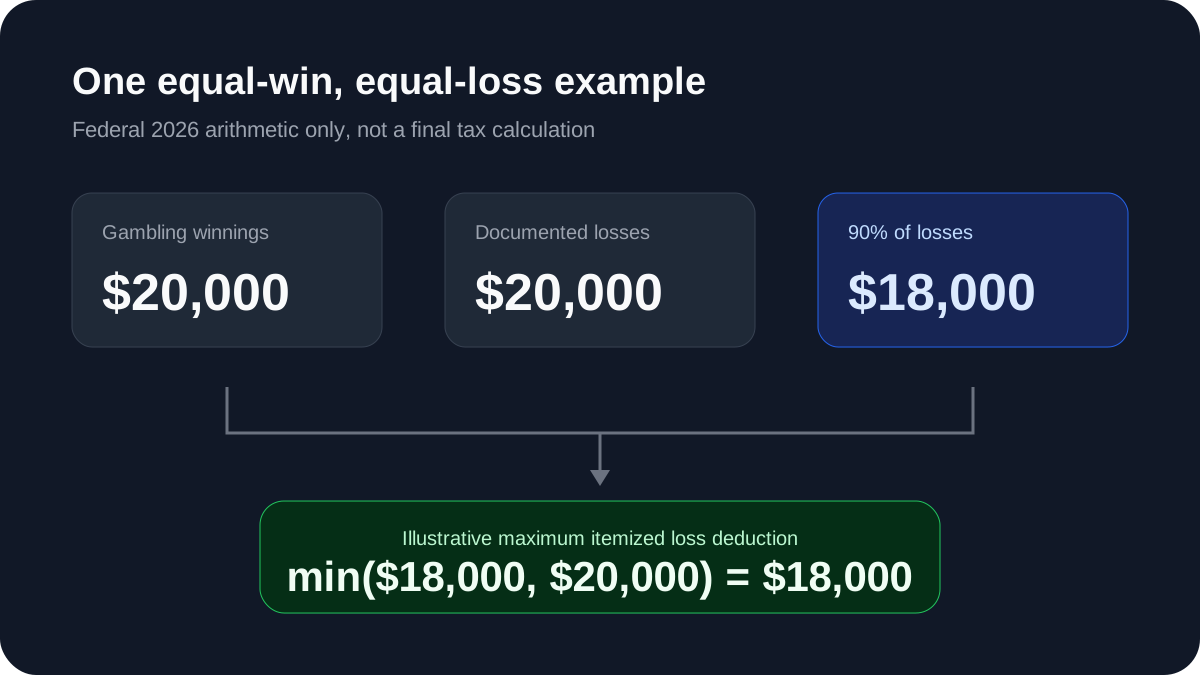
| $20,000 | $20,000 | $18,000 | $20,000 | $18,000 | $2,000 |
| $20,000 | $15,000 | $13,500 | $20,000 | $13,500 | $1,500 |
| $50,000 | $80,000 | $72,000 | $50,000 | $50,000 | $30,000 |
The second row shows the new issue most clearly. A player has $20,000 of winnings and $20,000 of documented losses. Ninety percent of the losses is $18,000. Because $18,000 is less than the $20,000 winnings cap, the illustrative maximum deduction is $18,000.
The first and fourth rows are different. In those examples, the winnings cap is lower than 90% of the losses. The formula therefore stops the deduction at the winnings amount. Some of the unused losses reflect an overall gambling loss, not only the new 10% reduction.
You can test your own numbers in the gambling tax calculator. Use it as a planning aid, then have a tax professional check the return treatment.
Winnings reporting and loss deductions are separate
The IRS treats these as two questions:
- What winnings must you report? The IRS Topic 419 says gambling winnings are taxable and all winnings must be reported, including winnings not shown on Form W-2G.
- What losses can you deduct? For 2026, the itemized loss deduction is subject to the 90% formula and the winnings cap.
Do not use a Form W-2G threshold as a tax-free threshold. The 2026 Instructions for Forms W-2G and 5754 set out information-reporting rules, including rules for poker tournaments. They do not say that smaller gambling winnings can be ignored.
Why crypto poker needs two records
A room statement can show the poker result, but it may not show the US-dollar value of each crypto transaction. A wallet record can show transfers, but it usually does not explain buy-ins, cash-outs, tournament entries, bonuses or rakeback.
Keep both layers:
| Poker record | Crypto record |
|---|---|
| Session or tournament date | Transaction date and time |
| Buy-in, cash-out and prize | Asset and quantity |
| Bonus and rakeback | US-dollar value at the time |
| Fees charged by the room | Wallet or exchange label |
| Net result | Transaction ID and network fee |
The IRS says digital assets are property, so later swaps, sales or spending can create a separate record question. A poker win and a later change in the coin's value are not the same event.
For a full monthly workflow, use our crypto poker tax records guide. It covers statements, wallet labels, exchange exports and reconciliation without repeating the 2026 deduction calculation here.
A record routine that supports the formula
Use a routine you can repeat:
- Export poker-room statements every month.
- Record each cash-game session and each tournament result.
- Save the wallet transaction ID for every deposit and withdrawal.
- Record the asset quantity and US-dollar reference value at the transaction time.
- Keep separate totals for gross winnings and documented losses.
- Reconcile room totals against wallet and exchange movements.
- Back up the files before the room or exchange export expires.
Do not rely on the year-end account balance. A balance is a snapshot. It does not show the gross winnings and losses that the federal calculation needs.
Use the gambling tax calculator to check the arithmetic, then give the result and the source records to a qualified professional who can apply federal and state rules to your return.

Elena Volkov
Industry & Regulation Analyst · 7 years
Elena tracks the regulatory landscape for crypto poker across every major jurisdiction. From Curacao licensing changes to emerging frameworks in Latin America, she provides context that helps players and operators understand what's legal, what's gray, and what's shifting. Her reporting on room closures and payment processor changes has earned her a reputation as the most reliable news source in the crypto poker space. Hits the trails on weekends to clear her head.