
Mystery bounty value: $145 before the top prize, $50 after
Our ten-envelope example shows how a mystery bounty's average value changes after a prize is drawn. Check the remaining pool before using its average.

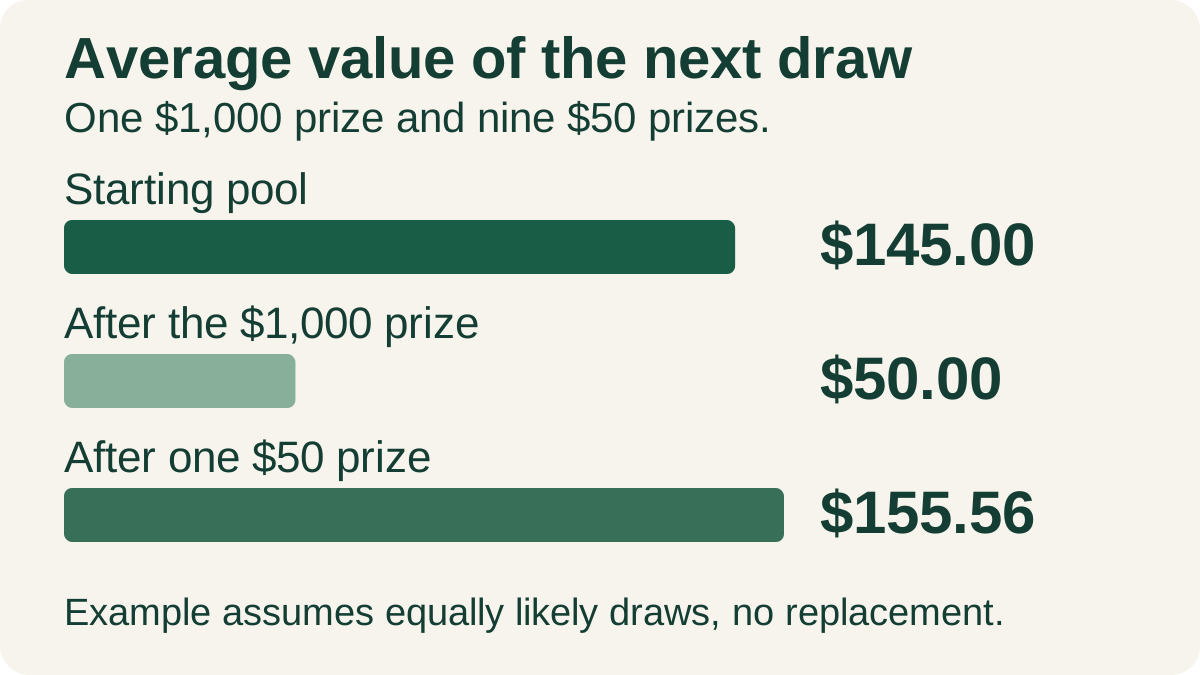
In our ten-envelope example, a mystery bounty has an average value of $145. Once someone draws the $1,000 top prize, the average falls to $50. The prizes still available determine the next draw's value.
The starting pool contains one $1,000 envelope and nine $50 envelopes. That is $1,450 spread across ten equally likely draws. No envelope pays $145: nine of the ten pay only $50.
How one draw changes the average bounty
Divide the total value of the remaining prizes by the number of remaining envelopes. Our starting calculation is $1,450 ÷ 10 = $145.
If the $1,000 envelope goes first, $450 remains in nine envelopes. Every remaining draw pays $50. The next bounty's average value has fallen by $95.
If a $50 envelope goes first, the result moves the other way. There is still a $1,000 prize, plus eight $50 prizes. The next draw averages $1,400 ÷ 9, or $155.56.
| Pool | Draws left | Average |
|---|---|---|
| Starting pool | 10 | $145.00 |
| $1,000 drawn | 9 | $50.00 |
| One $50 drawn | 9 | $155.56 |
The chance of the top prize starts at one in ten, or 10%. After a $50 draw, it becomes one in nine, about 11.11%. After the top prize is claimed, that chance is zero.
Use the remaining pool, then record the actual payout
PokerStars' mystery bounty rules explain when its bounty phase starts and where players can see the remaining prizes. Check your own event's rules and prize display. The ten-envelope pool above is our example, not an advertised event.
An old screenshot of the starting pool can give the wrong average during play. Read the current prize counts, multiply each prize by its remaining count, and add those amounts. Divide by the number of draws left.
This average alone cannot price an all-in call. You still need the chance of winning an eligible bounty, the chips at risk and the effect on regular tournament prizes. Our calculation assumes you already have one valid draw.
After the event, put only the bounties actually paid into the tournament ROI calculator, together with regular prizes and the full entry cost. A $50 envelope adds $50 to your returns even if its average value before opening was $145.
Assumptions: ten equally likely envelopes, prizes removed after each draw, one $1,000 prize and nine $50 prizes. No replacement, shared bounty or unclaimed ticket changes the pool. A different draw system needs its own probabilities. Figures are rounded to cents only after division.
Source and calculation checked September 23, 2026. Published September 23, 2026. Updated September 23, 2026.

Ryan Taylor
Player Coach · 5 years
Ryan specializes in making poker and crypto accessible to complete beginners. He writes step-by-step guides on everything from setting up a Bitcoin wallet to understanding position at the table. His coaching content focuses on building solid fundamentals before moving up in stakes. Players appreciate his patient, jargon-free explanations. Catches waves at his local break whenever the swell is right.
Read next
PKO bounty payouts: three knockouts, still a $5 loss
Our $55 poker example pays $50 from three knockouts. See which bounty money reaches your account and which amount stays on your head.
3 min read
Time rake vs pot rake: when a $12 seat fee costs less
Compare a $12 hourly poker fee with $4 taken from each pot you win. Our worked example shows the break-even point and how a daily fee changes it.
3 min read